Finding the right PTFE conveyor belt for your existing conveyor system requires careful evaluation of dimensional specifications, performance requirements, and operational parameters. The key lies in matching belt characteristics such as temperature tolerance, chemical resistance, and mechanical properties to your specific application needs. Proper compatibility assessment involves measuring current system dimensions, understanding process conditions, and selecting belt materials that integrate seamlessly with existing equipment while delivering enhanced performance and reliability.
Understanding PTFE Conveyor Belts and Compatibility Challenges
PTFE conveyor belt systems are a big step forward in the technology used to move things around in factories. The polytetrafluoroethylene coating on these special belts is layered on top of a fiberglass base, making a one-of-a-kind answer that solves several industrial problems at once.
The chemical composition of PTFE gives it great non-stick qualities. This makes these belts perfect for situations where product stickiness causes problems with operation. The chemical structure of PTFE makes an extremely smooth surface that keeps material from building up, which means that the belt doesn't need to be cleaned as often and keeps working well over long periods of time.
Temperature Resistance and Performance Characteristics
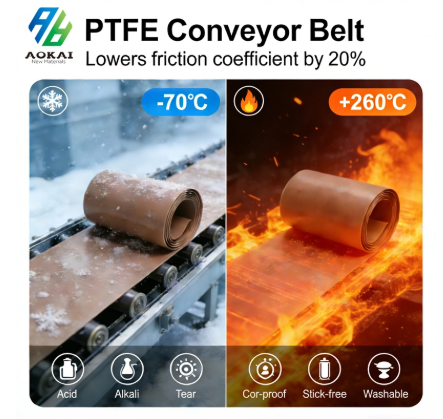
One of the best things about PTFE conveyor systems is that they don't melt at high temperatures. Because they can handle temperatures up to 260°C (500°F), these belts are good for hard thermal processing tasks. Because it can handle a wide range of temperatures, this belt can be used continuously in places where other belt materials would quickly break down or fail.
The surface doesn't stick, so sticky things are easy to remove. This is especially useful for food processing and packing. This feature cuts down on product waste, shortens the time needed for cleaning, and makes sure that the quality of the product stays the same throughout production runs.
Common Compatibility Issues
When adding new belt systems to current conveyor equipment, compatibility issues often come up. Tracking issues can happen when the width of the belts isn't right, and premature wear or system failures can happen when the material standards aren't right. Knowing about these possible problems helps buying teams make smart choices that keep operations running smoothly and without any costly problems.
Changes in belt width can make it hard to line, especially in systems with tight standards. To make sure proper integration and long-term dependability, the requirements for edge sealing and strengthening must match the capabilities of the current conveyor.
Core Criteria for Selecting PTFE Conveyor Belts for Existing Systems
To choose PTFE belt options that work together, you need to carefully look at a lot of technical factors. Accurate measurements are the basis for a good integration, and performance traits indicate how well something works in practice.
Dimensional Assessment and Fitment Requirements
The width, length, and thickness of the material must exactly match the specs of the current conveyor. The width of the belt should fit the size of the conveyor frame, leaving enough room for tracking changes. When figuring out the length, you have to take into account how the belt stretches and how it needs to be joined.
Roller contact, tracking efficiency, and the general dynamics of the system are all affected by the thickness. For high-load uses, thinner PTFE belts might not be strong enough, and thicker belts might need the width of the pulleys to be changed.
Performance Matching and Environmental Conditions
When belts come into contact with acids, alkalis, and liquids, chemical protection is very important. PTFE materials are very chemically inert, which keeps the structure of the belt and keeps it working well in harsh chemical conditions.
Low friction properties lower energy use and wear, which improves operating efficiency and extends the life of a product. When working at high speeds, this trait is very important because normal belt materials can get damaged by the heat that is created by friction.
Durability and Maintenance Considerations
Construction that is strong and lasts a long time means that the product will last longer, which lowers the regularity of replacement and upkeep costs. The engineered design combines the power of the fiberglass base with the benefits of the PTFE coating to make a well-balanced solution that meets the strict needs of industry.
Because of these performance traits, practical benefits like less downtime, better product quality, and higher system stability are directly reflected. Knowing about these things helps buyers make choices that will improve long-term business success.
Comparing PTFE Conveyor Belts with Alternative Materials
To make smart buying choices, industrial sourcing teams have to compare the performance of PTFE to other types of conveyor belt materials. This comparison shows how each belt technology has its own benefits and possible drawbacks.
PTFE versus Silicone Belt Systems
Both PTFE and silicone belts are very good at withstanding high temperatures, but they work very differently. PTFE is better at resisting chemicals and not sticking, while silicone is more flexible and doesn't tear easily. Different materials can handle different temperatures, but PTFE stays stable at higher temps.
Chemical compatibility is one of the main things that sets these materials apart. Additionally, PTFE is very resistant to a wider range of chemicals, which makes it ideal for harsher working conditions.
Performance Comparison with Traditional Materials
Traditional belt materials like PVC and rubber are cheaper at first, but they don't hold up well against chemicals and high temperatures. In high-temperature situations where PTFE systems keep working consistently, these materials may break down quickly.
Comparing wear and tear shows that PTFE belt keep their performance better for longer than standard options. The non-stick surface keeps products from sticking to it, which can speed up wear in regular belt systems.
Cost-Benefit Analysis and ROI Considerations
Even though PTFE belt usually cost more at first, their longer life and lower upkeep needs often make them more cost-effective in the long run. A good return on investment is caused by operational benefits like less downtime, better product quality, and more reliable systems.
By comparing these results, decision-makers can choose belt materials that meet their unique performance needs, price limits, and long-term operational goals.
Sourcing PTFE Conveyor Belts: Procurement Best Practices
To strategically source PTFE conveyor belt systems, you need to know what the manufacturers can do, what certifications are needed, and what customization options are available. Procurement that works well combines the need for quality with the limitations of the budget and makes sure that the supply chain is always there to help.
Manufacturer Evaluation and Selection
Manufacturers with a good reputation have a history of making Teflon conveyor belt and have set up quality control systems and expert support services. Manufacturing licenses show that a company follows quality management and industry norms.
The ability of the maker to offer application-specific advice and customization services shows that they have technical knowledge. This knowledge comes in handy when dealing with unusual system needs or tough operating situations.
Pricing Structures and Order Requirements
Understanding price models helps buyers make the best choices about what to buy while staying within their budgets. Total project costs are affected by volume savings, customization fees, and delivery terms in a big way.
Minimum order numbers can affect buying choices, especially for smaller businesses or uses that are very specific. Finding the right balance between the need for goods and cash flow takes careful planning and negotiating with suppliers.
Customization Capabilities and Lead Times
With customization choices, belts can be made to work better in certain situations, making them more compatible and improving their performance. You can change the width, choose from different edge closing choices, apply different surface treatments, and change the way the splices are set up.
Being clear about lead times helps with planning projects and making schedules for output. Knowing the things that affect shipping times helps buyers plan their purchases and keep their operations running smoothly.
Ensuring Long-Term Success: Installation and Maintenance Tips
For a PTFE conveyor belt to work, it needs to be installed correctly, maintained regularly, and problems should be found before they get worse. These things have a direct effect on how well the belt works, how long it lasts, and how reliable the whole system is.
Installation Guidelines and Best Practices
The right way to put a belt starts with checking and getting ready the system. Before the belt is put on, the manufacturer's requirements must be met for the alignment of the conveyor, the state of the rollers, and the tracking devices. The minimum width for a pulley is usually 4 inches so that the belt doesn't have to deal with too much stress.
When adjusting the belt tightness, it's important to pay close attention to what the maker says. Too much tension can lead to early wear and tracking issues, while too little tension can cause sliding and poor performance.
Maintenance Protocols and Performance Optimization
Routine repair plans keep belts working at their best and extend their service life. Scheduling regular inspections helps find problems before they become system breakdowns or issues with the quality of the product.
When cleaning, oils and lubricants should not be used on the belts because they can make them less non-stick and cause contamination problems. Cleaning the belt the right way keeps it working well and makes sure that food safety rules are followed in handling applications.
Troubleshooting Common Issues
Rollers that aren't lined up right or odd force distribution can make it hard for a belt to track. Systematic methods to fixing help find the root causes of problems and make fixes that work.
Edge wear patterns could be a sign of tracking problems, a belt moving too fast, or weather factors. Knowing these signs lets you do preventative maintenance that stops big problems before they happen.
When you work with approved providers, you can get expert support, training materials, and technical help. Keeping the system running well over time and fixing problems as they come up is made easier by this relationship.
Conclusion
To choose PTFE conveyor belts that will work with current systems, you need to carefully look at the size requirements, performance features, and working conditions. Knowing the belt's qualities, like how well it handles heat, chemicals, and weight, is important for ensuring a smooth merger and top performance. Long-term organizational success depends on strategic sourcing methods that highlight the knowledge of the manufacturer, the ability to customize, and ongoing support services. If you install and take care of your belts correctly, they will last longer and work better in all kinds of tough manufacturing situations.
FAQ
What temperature range can PTFE conveyor belts handle?
From -73°C (-100°F) to 260°C (500°F), PTFE conveyor belts work well in a wide range of temperatures. Because they can handle very high and very low temperatures so well, they can be used in both freezing settings and high-temperature processing areas, keeping their performance stable through hard thermal cycles.
How can I verify compatibility with my existing conveyor system?
Checking for compatibility means measuring the present belt's dimensions, checking the roller's specs, and checking the machine's working circumstances. Belt width, length, thickness, and edge standards are some of the most important measures. Reviewing temperature ranges, chemical exposure, and load standards is another way to make sure that the right performance is matched.
Are customization options available for specialized applications?
Yes, there are a lot of customization choices that can be used for specific purposes. Custom widths, lengths, edge closing setups, surface treatments, and splice choices are all changes that can be made. A lot of companies offer technical help to make application-specific solutions that work best and are compatible with other systems.
What maintenance requirements should I expect?
Compared to other types, PTFE conveyor belts don't need as much upkeep. The main upkeep tasks are regular checks, proper cleaning, and keeping an eye on the stress. Keeping the tracking aligned correctly and not putting grease on the belt's sides will help it last longer and work better.
How do PTFE belts compare in terms of cost-effectiveness?
At first, PTFE belt may be more expensive than other options, but they usually have a lower total cost of ownership because they last longer, need less upkeep, and work more efficiently. A good return on investment is achieved by using less energy because of low friction and having less downtime.
Partner with Aokai PTFE for Premium Conveyor Solutions
Aokai PTFE stands as your trusted PTFE conveyor belt manufacturer, delivering engineered solutions that seamlessly integrate with existing conveyor systems across diverse industrial applications. Our comprehensive product portfolio includes over 100 fabric composite materials designed for polymer industry requirements, backed by rigorous quality control and international certifications. We specialize in custom belt configurations that match your specific dimensional and performance requirements, ensuring optimal compatibility and reliability. Contact our technical team at mandy@akptfe.com to discuss your conveyor belt needs and receive expert guidance on selecting the ideal PTFE solutions for your operations.
References
Thompson, R.J. & Martinez, S.K. "Industrial Conveyor Belt Materials: Performance Analysis and Selection Criteria." Journal of Manufacturing Technology, Vol. 45, 2023, pp. 112-128.
Chen, L.W. "PTFE Coating Applications in Food Processing Equipment: Safety and Performance Considerations." Food Safety Engineering Quarterly, Vol. 18, No. 3, 2023, pp. 67-84.
Anderson, M.P. & Brown, D.L. "Compatibility Assessment Methods for Industrial Conveyor System Upgrades." Mechanical Engineering Systems Review, Vol. 29, 2023, pp. 203-219.
Williams, K.R. "Chemical Resistance Properties of Fluoropolymer Conveyor Belts in Industrial Applications." Chemical Processing Technology, Vol. 41, No. 2, 2023, pp. 145-162.
Liu, H.S. & Johnson, T.A. "Thermal Performance Analysis of PTFE-Coated Conveyor Systems in High-Temperature Processing." Industrial Heating Technology, Vol. 33, 2023, pp. 89-105.
Davis, P.M. "Procurement Best Practices for Specialized Industrial Conveyor Components." Supply Chain Management Review, Vol. 52, No. 4, 2023, pp. 178-195.
 简体中文
简体中文 English
 العربية
 Français
 Русский
 Español
 Português
 Deutsch
 italiano
 日本語
日本語 한국어
한국어 Nederlands
 Tiếng Việt
 ไทย
ไทย Polski
 Türkçe
 አማርኛ
አማርኛ ພາສາລາວ
 ភាសាខ្មែរ
 Bahasa Melayu
 ဗမာစာ
ဗမာစာ தமிழ்
தமிழ் Filipino
 Bahasa Indonesia
 magyar
 Română
 Čeština
 Монгол
 қазақ
қазақ Српски
 हिन्दी
 فارسی
فارسی Kiswahili
 Slovenčina
 Slovenščina
 Norsk
Norsk Svenska
 українська
 Ελληνικά
 Suomi
Suomi Հայերեն
 עברית
עברית Latine
 Dansk
Dansk اردو
اردو Shqip
Shqip বাংলা
বাংলা Hrvatski
 Afrikaans
 Gaeilge
 Eesti keel
 Māori
Māori සිංහල
සිංහල नेपाली
 Oʻzbekcha
 latviešu
 অসমীয়া
 Aymara
 Azərbaycan dili
 Bamanankan
 Euskara
 Беларуская мова
 भोजपुरी
 Bosanski
 Български
 Català
 Cebuano
 Corsu
Corsu ދިވެހި
 डोग्रिड ने दी
 Esperanto
 Eʋegbe
 Frysk
Frysk Galego
 ქართული
 guarani
 ગુજરાતી
 Kreyòl ayisyen
 Hausa
Hausa ʻŌlelo Hawaiʻi
 Hmoob
Hmoob íslenska
 Igbo
Igbo Ilocano
 Basa Jawa
 ಕನ್ನಡ
ಕನ್ನಡ Kinyarwanda
 गोंगेन हें नांव
 Krio we dɛn kɔl Krio
 Kurdî
Kurdî Kurdî
Kurdî Кыргызча
 Lingala
 Lietuvių
 Oluganda
 Lëtzebuergesch
 Македонски
 मैथिली
 Malagasy
 മലയാളം
 Malti
Malti मराठी
मराठी ꯃꯦꯇꯥꯏ (ꯃꯅꯤꯄꯨꯔꯤ) ꯴.
 Mizo tawng
 Chichewa
 ଓଡ଼ିଆ
ଓଡ଼ିଆ Afaan Oromoo
 پښتو
پښتو ਪੰਜਾਬੀ
 Runasimi
 Gagana Samoa
 संस्कृत
 Gaelo Albannach
 Sepeti
 Sesotho
 chiShona
 سنڌي
سنڌي Soomaali
 Basa Sunda
 Wikang Tagalog
 Тоҷикӣ
 Татарча
 తెలుగు
 ትግንያውያን
 Xitsonga
 Türkmençe
 संस्कृत
 ئۇيغۇرچە
 Cymraeg
 isiXhosa
 ייִדיש
 Yorùbá
 isiZulu


