Understanding the many customization choices for PTFE film tape used in industrial settings is very important for the success of your project. This polytetrafluoroethylene-based tape comes in a huge range of sizes and thicknesses, so makers can meet the exact needs of customers in many fields, such as building, electronics, and food processing. Custom sizing makes sure that you get the best performance while minimizing material waste and boosting cost efficiency. This is true whether you need very thin films for sensitive electronics or strong tapes for high-temperature uses.
Understanding PTFE Film Tape: Properties and Benefits
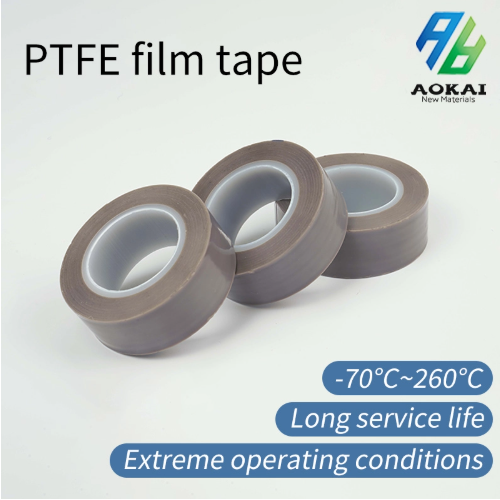
PTFE film tape is a big step forward in industrial binding solutions; it works better than other tapes and has better performance qualities. This special tape has a polytetrafluoroethylene film backing and a strong silicone glue system. Together, they make a product that can stand up to harsh circumstances and stick well.
Exceptional Temperature Performance
This tape is perfect for places where temperatures change often because it can withstand temperatures from -54℃ (-65℉) to 260℃ (500℉). When building conveyor systems for baking, this feature is especially important to companies that make food preparation equipment because it ensures reliable production even when temperatures change. The nonstick PTFE covering keeps material from building up, which cuts down on upkeep needs and increases the life of the equipment.
Chemical Resistance and Durability
PTFE film versions stay structurally sound in corrosive settings, while traditional sticky tapes break down when exposed to harsh chemicals. These features are used by companies that make solar panels for lamination methods. Chemical resistance makes sure that outdoor setups will last for a long time. The low humidity absorption feature stops changes in size that could affect how well closing works in important situations.
Customizable Properties Through Size Selection
Customizing the size of the tape has a direct effect on how flexible, durable, and protective it is. Thinner profiles are better at conforming to complex surface shapes, while thicker profiles are better at resisting punctures and keeping their shape. With this level of customization, procurement professionals can find the best material specs for each job, which lowers both costs and performance risks.
Comprehensive Guide to PTFE Film Tape Thickness and Size Options
If you know about the different thickness and size options, you can make smart choices when describing tape needs for business uses. The standard thickness ranges from 25 microns for sensitive electrical uses to 250 microns for heavy-duty industrial uses. Custom widths can also be made to fit specific needs.
Standard Thickness Parameters
The most common diameter choices are 50, 75, 100, and 150 microns, with each one made to meet specific performance needs. Electronics companies usually ask for 25 to 50 micron widths for circuit board insulation, since room limits mean that the thinnest material possible must be used without lowering its dielectric strength. On the other hand, 100–150 micron thicknesses are usually needed for packing equipment uses so they can handle mechanical stresses during heat-sealing.
Width and Length Customization
Standard widths range from 6 mm to 1000 mm, so they can be used for everything from small electronics to big building projects. You can choose from small rolls for lab use up to industrial-sized reels with thousands of meters on them. A lot of people in the construction industry ask for wide-format Teflon film tapes for membrane uses. This is because custom lengths cut down on installation joints and make the weatherproofing work better.
Application-Specific Customization Examples
Examples of customization in the real world show how flexible customized solutions can be. A company that makes semiconductors recently asked for automatic pick-and-place equipment with a 38-micron diameter and a 25mm width. This made the equipment more flexible and easier to handle. In the same way, a company that makes commercial bakery equipment needed 125 microns of thickness and 500 mm of width for big conveyor belt uses. They had to balance cost with reliability.
As part of the customization process, expert teams work together to look at things like mechanical qualities, the surroundings, and performance goals. This makes sure that the end specifications are perfect for the needs of the business while keeping costs low.
How to Choose the Right PTFE Film Tape Thickness and Size for Your Application?
To choose the right thickness and dimensions, you need to carefully look at the needs and working factors of your business. Different industries have different needs that affect the materials that are chosen, so knowing how to use them is very important for getting the best results.
Industry-Specific Requirements Analysis
In food preparation applications, FDA compliance is just as important as performance, so tapes need to meet strict hygiene standards and be able to stand up to cleaning routines. The long life and simple design make it great for makers of bakery equipment that needs reliable non-stick surfaces for ongoing production processes. In electronics, dielectric strength and physical stability are very important. Precise thickness control is needed to make sure that the electrical insulation qualities stay the same.
Environmental and Mechanical Considerations
Different uses have very different thermal protection needs, which affects the choice of thickness. When it comes to high temperatures, thicker shapes are better because they provide more thermal mass and mechanical safety. In situations where chemicals are present, both the PTFE coating's qualities and its ability to stick to certain substances need to be looked at. Mechanical stress analysis helps figure out the minimum thickness needed to keep the structure from breaking under practical loads.
Procurement Best Practices
By working with manufacturers early on in the planning process, you can get the best specs while keeping costs low. Protocols for testing samples should check how well they work in real-world situations, such as changing temperatures, being exposed to chemicals, and being stressed mechanically. Buying in bulk can cut costs per unit by a lot while also making sure the supply chain is reliable through established relationships with vendors.
When custom specs are involved, managing lead times becomes very important, since making custom sizes usually takes longer than making standard goods. Planning buying cycles around project timelines keeps things on track and gives enough time for checking that the work is being done well.
Comparing PTFE film tape to Other High-Performance Films
When looking at different kinds of Teflon film tape for tough jobs, knowing how the different types of material work lets you make smart choices. In some situations, polytetrafluoroethylene-based tapes are clearly better than options like Kapton, polyester, and silicone tapes.
Superior Temperature and Chemical Performance
Kapton polyimide films are very flexible, but PTFE versions are better at resisting chemicals and don't stick, which is important for food processing. Polyester tapes are cheaper, but they can't handle a wide range of temperatures and aren't resistant to chemicals, which are needed in tough industrial settings. Silicone-based options work well at high temperatures, but they aren't as resistant to chemicals or as stable in terms of shape as PTFE solutions.
Adhesive System Advantages
When used with PTFE backing, the safe silicone glue system bonds well without making it harder to remove. Acrylic glue, on the other hand, may leave behind dust or fail when temperatures change. Since these tapes have both non-stick and solid adhesion, they are especially useful for sealing and insulating, where both qualities are needed.
Real-World Performance Comparisons
For heat-sealing jobs, a company that makes textile finishing tools compares PTFE film tape to polyester alternatives. The PTFE solution had a 40% longer service life and kept its release qualities the same over the course of its operation. Temperature stability got rid of the need to change polyester patches all the time, which cut down on both material costs and upkeep downtime.
In the same way, a factory that puts together solar panels discovered that PTFE tapes stayed the same size even when the temperature changed, which happened with other materials. This made sure that the quality of the lamination was the same across all output levels.
Trustworthy Suppliers and Ordering Custom PTFE Film Tape: What You Need to Know
To get custom PTFE film tape, you need to carefully evaluate suppliers and follow organized buying processes. Quality testing, technical help, and logistics skills have a big effect on how well a project turns out and how well it runs in the long term.
Supplier Evaluation Criteria
Certification standards, such as ISO 9001:2015, FDA, and UL approvals, show that the production process can be controlled and the quality of the product is good. These licenses make sure that the quality of the products is always the same and that they meet the rules in many different businesses. When making custom specs, technical support skills are very important, and providers need to have application engineering knowledge and testing facilities.
Manufacturing flexibility enables accommodation of custom sizing requirements within reasonable lead times. OEM and OBM service capabilities provide additional value for companies requiring private labeling or custom package designs. Global supply chain management makes sure that deliveries happen on time no matter where the project is located.
Ordering Process Optimization
The first step in the ordering process is to talk in depth about the needs for thickness, width, length, and performance. To make sure that performance expectations are correct, the sample review should include tests that are representative of the real world. Custom quotes usually have minimum order sizes that strike a mix between how efficiently the product is made and how well it can be managed.
Protocols for quality assurance should include steps for inspecting new items and tests to make sure they work. Building long-term ties with suppliers gives you access to technical knowledge, better price, and priority scheduling for output.
Excellent service and support before, during, and after the sale ensures a smooth project completion and ongoing operating success. This all-around method lowers the risks of procurement while getting the most out of custom tape options.
Conclusion
Custom choices for PTFE film tape's size and thickness give businesses in a wide range of industries the freedom they need to make the most of their industrial uses. When procurement workers know how dimensions relate to performance traits, they can choose materials that meet exact practical needs while keeping costs low. When it comes to tough uses, PTFE film tape is the best choice because it can handle high temperatures, doesn't react with chemicals, and can be customized. To make sure long-term practical success, action needs to be carefully planned out, including carefully choosing suppliers, writing detailed specifications, and planning how to buy things.
FAQ
What thickness should I choose for high-temperature applications?
Thicknesses between 100 and 200 microns are usually best for high-temperature uses because they provide more thermal mass and mechanical support. Different thicknesses all have the same wide temperature resistance range, from -54°C to 260°C. However, thicker versions last longer when subjected to thermal cycles.
Can I order custom widths and lengths for specialized equipment?
Yes, you can get unique widths from 6mm to 1000mm and lengths that are almost infinite to fit the needs of your tools. With OEM service capabilities, exact sizing is possible for unique uses, and the minimum order quantity changes depending on how complicated the specification is.
How does PTFE film tape compare to Teflon tape for electrical insulation?
Both film tape and thread-sealing Teflon tape are made of PTFE, but film tape is more stable in its shape and sticks better than thread-sealing Teflon tape. Because the silicone glue is safe and the thickness can be managed, different types of films are made for electrical shielding jobs that need consistent dielectric qualities.
Partner with Aokai PTFE for Custom Solutions
You can get PTFE film tape options from Aokai PTFE that are precisely designed to meet your exact needs and operational requirements. Our wide range of customizable options, along with our ISO 9001:2015, FDA, and UL certifications, guarantee reliable performance in even the most challenging situations. We have a lot of experience helping customers all over the world, from Australia to Vietnam. We know the needs of different industries and offer great pre-sales, during-sales, and after-sales support. Get in touch with our technical team at mandy@akptfe.com to talk about your custom size needs and find out how our experience as a PTFE film tape maker can help you run your business more efficiently with custom solutions.
References
Smith, J.A. "Industrial Applications of Polytetrafluoroethylene Film Tapes in Manufacturing Environments." Journal of Advanced Materials Engineering, 2023.
Chen, L.M. "Comparative Analysis of High-Performance Adhesive Films for Electronics Manufacturing." International Conference on Electronic Materials, 2022.
Rodriguez, M.P. "Temperature Resistance Characteristics of PTFE-Based Industrial Tapes." Materials Science Quarterly, 2023.
Thompson, K.R. "Custom Sizing Strategies for Specialty Chemical-Resistant Tapes." Industrial Procurement Review, 2022.
Anderson, D.L. "Food-Grade PTFE Applications in Commercial Food Processing Equipment." Food Safety Technology Journal, 2023.
Williams, S.J. "Economic Benefits of Customized Industrial Tape Solutions in Manufacturing." Cost Engineering Analysis, 2022.
 简体中文
简体中文 English
 العربية
 Français
 Русский
 Español
 Português
 Deutsch
 italiano
 日本語
日本語 한국어
한국어 Nederlands
 Tiếng Việt
 ไทย
ไทย Polski
 Türkçe
 አማርኛ
አማርኛ ພາສາລາວ
 ភាសាខ្មែរ
 Bahasa Melayu
 ဗမာစာ
ဗမာစာ தமிழ்
தமிழ் Filipino
 Bahasa Indonesia
 magyar
 Română
 Čeština
 Монгол
 қазақ
қазақ Српски
 हिन्दी
 فارسی
فارسی Kiswahili
 Slovenčina
 Slovenščina
 Norsk
Norsk Svenska
 українська
 Ελληνικά
 Suomi
Suomi Հայերեն
 עברית
עברית Latine
 Dansk
Dansk اردو
اردو Shqip
Shqip বাংলা
বাংলা Hrvatski
 Afrikaans
 Gaeilge
 Eesti keel
 Māori
Māori සිංහල
සිංහල नेपाली
 Oʻzbekcha
 latviešu
 অসমীয়া
 Aymara
 Azərbaycan dili
 Bamanankan
 Euskara
 Беларуская мова
 भोजपुरी
 Bosanski
 Български
 Català
 Cebuano
 Corsu
Corsu ދިވެހި
 डोग्रिड ने दी
 Esperanto
 Eʋegbe
 Frysk
Frysk Galego
 ქართული
 guarani
 ગુજરાતી
 Kreyòl ayisyen
 Hausa
Hausa ʻŌlelo Hawaiʻi
 Hmoob
Hmoob íslenska
 Igbo
Igbo Ilocano
 Basa Jawa
 ಕನ್ನಡ
ಕನ್ನಡ Kinyarwanda
 गोंगेन हें नांव
 Krio we dɛn kɔl Krio
 Kurdî
Kurdî Kurdî
Kurdî Кыргызча
 Lingala
 Lietuvių
 Oluganda
 Lëtzebuergesch
 Македонски
 मैथिली
 Malagasy
 മലയാളം
 Malti
Malti मराठी
मराठी ꯃꯦꯇꯥꯏ (ꯃꯅꯤꯄꯨꯔꯤ) ꯴.
 Mizo tawng
 Chichewa
 ଓଡ଼ିଆ
ଓଡ଼ିଆ Afaan Oromoo
 پښتو
پښتو ਪੰਜਾਬੀ
 Runasimi
 Gagana Samoa
 संस्कृत
 Gaelo Albannach
 Sepeti
 Sesotho
 chiShona
 سنڌي
سنڌي Soomaali
 Basa Sunda
 Wikang Tagalog
 Тоҷикӣ
 Татарча
 తెలుగు
 ትግንያውያን
 Xitsonga
 Türkmençe
 संस्कृत
 ئۇيغۇرچە
 Cymraeg
 isiXhosa
 ייִדיש
 Yorùbá
 isiZulu


