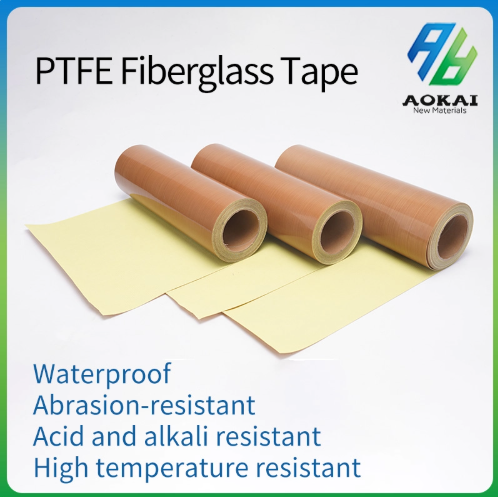
Jiangsu Aokai New Materials, a professional manufacturer and source factory of PTFE high-temperature cloth, gives you a detailed introduction. Polytetrafluoroethylene (PTFE) coated fiberglass cloth features excellent chemical inertness and generally delivers outstanding ozone aging resistance. However, it is not completely immune to ozone erosion, and its overall performance is highly affected by ozone concentration, ambient temperature, continuous exposure time and other external factors.
Thanks to its unique molecular structure, PTFE exhibits strong ozone resistance under standard conditions. The fully fluorinated carbon-fluorine (C-F) bond boasts an extremely high bond energy of approximately 485 kJ/mol. Meanwhile, its spiral molecular structure forms a dense protective shield of fluorine atoms, preventing strong oxidants such as ozone from attacking the internal carbon-carbon (C-C) main molecular chain.
Nevertheless, ozone can significantly alter the surface characteristics of PTFE and trigger a series of chemical and physical changes. Studies have shown that PTFE exposed to ozone has a friction coefficient about three times higher than that in a normal air environment, accompanied by obvious wear marks. This is mainly caused by ozone-induced surface oxidation, molecular bond breakage and material softening.
With long-term exposure to ozone, especially under harsh working conditions such as high temperature and high ozone concentration, PTFE high-temperature cloth will gradually develop from microscopic damage to macroscopic functional failure, with specific failure manifestations as follows:
Molecular chain breakage and degradationOzone fractures the C-C molecular chains of PTFE and produces small molecular fragments such as carbon tetrafluoride (CF₄) and carbonyl fluoride (COF₂). This leads to reduced molecular weight and fundamental performance degradation of the material.
Surface cracking and embrittlementIt is the most intuitive aging phenomenon. The material loses surface flexibility and generates network-like bright cracks under stress, namely ozone cracking. The cloth becomes stiff and brittle, and severe aging will further cause pulverization and structural damage.
Decline in mechanical propertiesMaterial degradation continuously reduces tensile strength, elongation at break, elasticity and other core mechanical indicators. Subsequent surface pulverization, peeling and thickness reduction will further weaken wear resistance and structural stability.
Deterioration of surface structural propertiesChemical structural damage changes key parameters such as surface energy and wetting angle. Microscopic cracks and pores formed by ozone erosion will expand in size, greatly weakening the original sealing and isolation performance.
The ozone resistance of PTFE high-temperature cloth is not only determined by the base material itself. Ambient temperature, combined aging effects and other external conditions also play decisive roles in its service life.
High temperature greatly accelerates ozone degradation. Under high-temperature conditions, the strong oxidation of ozone intensifies the molecular chain degradation of PTFE. Therefore, the long-term service temperature limit of PTFE products drops sharply from 260℃ in conventional air to 200℃–220℃ in ozone and strong oxidizing gas environments.
There is a synergistic aging effect between ozone and ultraviolet rays. In outdoor scenarios, the combination of UV radiation and ozone produces an amplified destructive effect far greater than that of a single factor.
In addition, product quality varies by manufacturer. Differences in production processes, coating thickness and formula design (such as the addition of anti-oxidant stabilizers) will lead to obvious gaps in long-term ozone resistance among different PTFE high-temperature cloth products.
Effective Methods to Improve Ozone Aging Resistance
1. Add high-efficiency antioxidants and light stabilizers to the PTFE formula to capture free radicals and delay oxidative degradation.
2. Adopt customized surface modification treatment to form a densified protective layer and enhance resistance to oxidizing gas erosion.
3. Optimize actual application conditions: control the working temperature below 200℃, and avoid long-term service in environments with high-concentration ozone and intense ultraviolet radiation.
Summary
PTFE high-temperature cloth performs stably and excellently at room temperature and low ozone concentration. However, oxidative degradation, surface cracking, embrittlement and comprehensive performance decline will occur in high-temperature, high-ozone or UV-coupled harsh environments. Reasonable environmental control and material modification can effectively slow down aging and greatly extend the long-term service life of the product.
The above technical content is provided by Jiangsu Aokai New Materials Technology Co., Ltd.
If you need further technical parameters, application solutions and customized services for our full-range products, including PTFE high-temperature cloth, PTFE high-temperature adhesive tape, PTFE mesh conveyor belt, seamless bonding machine belt, single-sided fluorine-coated cloth, high-temperature resistant conveyor belt and high-temperature fiberglass cloth, please feel free to contact us:
·Mr. Guo: +86 18944819998
·Mr. Liu: +86 13705266308
We always adhere to the business philosophy of professionalism and integrity, and provide one-stop industrial solutions and considerate after-sales service for global customers.
 简体中文
简体中文 English
 العربية
 Français
 Русский
 Español
 Português
 Deutsch
 italiano
 日本語
日本語 한국어
한국어 Nederlands
 Tiếng Việt
 ไทย
ไทย Polski
 Türkçe
 አማርኛ
አማርኛ ພາສາລາວ
 ភាសាខ្មែរ
 Bahasa Melayu
 ဗမာစာ
ဗမာစာ தமிழ்
தமிழ் Filipino
 Bahasa Indonesia
 magyar
 Română
 Čeština
 Монгол
 қазақ
қазақ Српски
 हिन्दी
 فارسی
فارسی Kiswahili
 Slovenčina
 Slovenščina
 Norsk
Norsk Svenska
 українська
 Ελληνικά
 Suomi
Suomi Հայերեն
 עברית
עברית Latine
 Dansk
Dansk اردو
اردو Shqip
Shqip বাংলা
বাংলা Hrvatski
 Afrikaans
 Gaeilge
 Eesti keel
 Māori
Māori සිංහල
සිංහල नेपाली
 Oʻzbekcha
 latviešu
 অসমীয়া
 Aymara
 Azərbaycan dili
 Bamanankan
 Euskara
 Беларуская мова
 भोजपुरी
 Bosanski
 Български
 Català
 Cebuano
 Corsu
Corsu ދިވެހި
 डोग्रिड ने दी
 Esperanto
 Eʋegbe
 Frysk
Frysk Galego
 ქართული
 guarani
 ગુજરાતી
 Kreyòl ayisyen
 Hausa
Hausa ʻŌlelo Hawaiʻi
 Hmoob
Hmoob íslenska
 Igbo
Igbo Ilocano
 Basa Jawa
 ಕನ್ನಡ
ಕನ್ನಡ Kinyarwanda
 गोंगेन हें नांव
 Krio we dɛn kɔl Krio
 Kurdî
Kurdî Kurdî
Kurdî Кыргызча
 Lingala
 Lietuvių
 Oluganda
 Lëtzebuergesch
 Македонски
 मैथिली
 Malagasy
 മലയാളം
 Malti
Malti मराठी
मराठी ꯃꯦꯇꯥꯏ (ꯃꯅꯤꯄꯨꯔꯤ) ꯴.
 Mizo tawng
 Chichewa
 ଓଡ଼ିଆ
ଓଡ଼ିଆ Afaan Oromoo
 پښتو
پښتو ਪੰਜਾਬੀ
 Runasimi
 Gagana Samoa
 संस्कृत
 Gaelo Albannach
 Sepeti
 Sesotho
 chiShona
 سنڌي
سنڌي Soomaali
 Basa Sunda
 Wikang Tagalog
 Тоҷикӣ
 Татарча
 తెలుగు
 ትግንያውያን
 Xitsonga
 Türkmençe
 संस्कृत
 ئۇيغۇرچە
 Cymraeg
 isiXhosa
 ייִדיש
 Yorùbá
 isiZulu