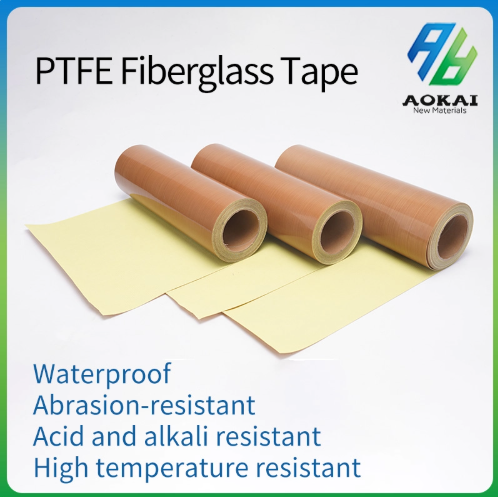
You have a roll of PTFE high-temperature tape that has been sitting on the shelf for months. Is it still good? Will it leave residue on your heat sealer? Will the adhesive fail under heat?
The answers depend on storage conditions and time. PTFE tape – like any pressure-sensitive adhesive product – has a finite shelf life. But if stored correctly, it can remain usable for longer than the labeled expiration.
Aokai PTFE manufactures PTFE tape with consistent quality. This guide explains official shelf life standards, performance degradation thresholds, and simple tests to check if an old roll is still usable.
Shelf Life Standards – How Long Does PTFE Tape Last?
The shelf life of PTFE high-temperature tape depends on how it is stored and the quality of the materials.
1. Specified storage conditions
To achieve the labeled shelf life, the tape must be kept under these conditions:
Parameter
Requirement
Temperature
10°C – 25°C (avoid extremes)
Relative humidity
40% – 70% RH
Position
Upright (vertical), not lying flat under weight
Packaging
Keep in original packaging
Environment
Away from heat sources, UV (direct sunlight), and chemicals
Pressure
Prevent heavy compression (no stacking heavy objects on top)
2. General shelf life by grade
Product Grade
Shelf Life (from production date)
Standard / economy
3 months
Premium (Aokai PTFE standard)
6 months
High-end (special formulations)
Up to 12 months
Important note: The shelf life is the period during which the tape is guaranteed to meet all performance specifications. After that, key properties may degrade. However, well-stored premium tape often remains usable beyond the labeled date – but testing is recommended.
Performance Degradation Thresholds – When Is Tape Considered Expired?
The core judgment rule: Key performance of the tape shall not degrade beyond the specified threshold when stored under required conditions. The industry general standard requires degradation to be less than 30%.
1. Peel strength (adhesion) – primary indicator
Requirement: Degradation less than 30% from initial value.
Why it matters: Silicone pressure-sensitive adhesive may dry out, oxidize, or transfer to the backing over time.
Acceptance: 180° peel strength shall not drop below 70% of the initial value.
2. Residue and unwinding performance
Expired tape typically shows:
Abnormally high unwinding force (hard to pull off the roll)
Silicone transfer on the backing (shiny marks or adhesive film on the non-stick side)
Black spots or stringy adhesive residue after application and cooling
Any visible adhesive residue after removal means the tape is unqualified.
3. Temperature resistance – loss of heat resistance
When exposed to high temperatures (e.g., 260°C), expired tape may:
Carbonize and turn yellow
Crack or peel off
Lose non-stick property
Acceptance: Qualified tape shall not carbonize, crack, or detach after baking at the rated temperature.
Requirement: Breakdown voltage shall remain above 80% of the rated value within shelf life.
Why: Aging-induced micro-pores in the adhesive layer cause a sharp drop in voltage resistance.
Quick Inspection Methods – How to Test Expired Tape
If you have a roll that has exceeded its labeled shelf life (or storage conditions were questionable), use these three simple tests to check if it is still usable.
1. Test 1 – Manual unwinding feel
How: Peel a length of tape from the roll at normal speed.
What to look for: The release liner (or the backing) should release smoothly. If it is hard to peel, or the adhesive surface feels tacky with visible marks, silicone transfer has occurred.
Result: If difficult unwinding or visible marks → discard the tape.
2. Test 2 – High-temperature residue test
How: Attach a sample of the tape to a clean stainless steel plate. Bake at 260°C for 30 minutes. Allow to cool, then remove the tape.
What to look for: Yellow stains, black spots, or hazy residue on the steel plate.
Result: Any visible residue → tape is deteriorated. Good tape will leave the plate perfectly clean.
3. Test 3 – Lamination and shrinkage test
How: Apply the tape to a substrate (e.g., metal plate) and heat to the intended operating temperature (e.g., 200°C). Observe after cooling.
What to look for: Obvious shrinkage (tape pulling back from edges) or blistering.
Result: Shrinkage or blistering means heat resistance has failed → replace the tape.
Storage Best Practices – Extend Shelf Life
To maximize the usable life of PTFE high-temperature tape, follow these guidelines:
First in, first out (FIFO): Use older stock before newer rolls.
Keep original packaging: The plastic wrap protects against dust and humidity. If opened, re-seal with plastic film.
Avoid stacking: Do not place heavy objects on top of tape rolls. Use separate racks.
Rotate stock quarterly: If storing for long periods, turn the rolls to change pressure points.
Monitor storage conditions: Use a temperature/humidity data logger if necessary.
Label with date: Write the production date or receiving date on each roll.
Aokai PTFE prints production dates on each roll label. We recommend using tape within 6 months of production for critical applications. For non-critical use, properly stored tape may remain functional for 12 months or more – but always test before putting into production.
Summary – Key Takeaways
Factor
Recommendation
Storage temperature
10-25°C
Storage humidity
40-70% RH
Shelf life (standard)
3-6 months (premium up to 12 months)
Peel strength degradation limit
≤30% loss (≥70% of initial)
Residue after high heat
Zero – any residue means failure
Unwinding feel
Smooth, no sticking
Expired tape test
260°C/30min residue test + manual unwind
Aokai PTFE manufactures PTFE high-temperature tape with consistent quality and labeled production dates. For long-term storage, we offer moisture-barrier packaging upon request. If you have old tape and are unsure of its condition, perform the 260°C residue test before using it in production.
If you want to learn more about detailed specifications, application scenarios and customized solutions for our full product range, including PTFE high-temperature fabrics, PTFE high-temperature tapes, PTFE mesh belts, seamless bonding machine belts, single-sided PTFE cloth, high-temperature resistant conveyor belts and high-temperature resistant fiberglass fabrics, please contact us: