You’ve leveled the bed, tuned the extruder, and sliced the model perfectly. Yet halfway through a long print, the first layer lifts – or worse, the tape on your hot bed has warped, leaving melted filament stuck to the surface.
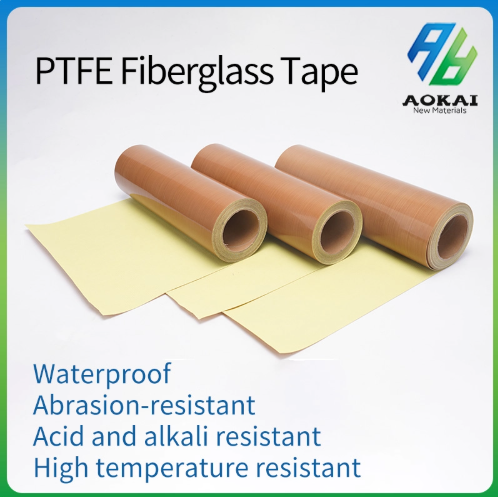
For 3D printing enthusiasts and professionals alike, the PTFE high-temperature tape used on the hot bed is not an afterthought – it’s a critical component that affects adhesion, release, and print quality.
Aokai PTFE has supplied tape to printer manufacturers and hobbyists for years. Based on real-world feedback, here are the four key performance indicators you must evaluate.
Temperature Resistance Range – Fundamental Safety Guarantee
The tape’s long-term temperature resistance must fully cover the regular operating temperatures of hot beds, avoiding carbonization, deformation, and peeling.
Printing Material
Typical Hot Bed Temp
Required Tape Rating
PLA
50-60°C
Standard (260°C) – overkill but safe
PETG
70-80°C
Standard (260°C)
ABS
90-110°C
Standard (260°C)
Nylon / PC
100-140°C
Standard or reinforced
PEEK / PEI (engineering)
140-200°C+
Reinforced grade recommended
Recommendations:
Standard use (most materials): Continuous working temperature range from -70°C to 260°C – compatible with all common filaments.
Extreme conditions (engineering plastics above 200°C): Reinforced grade PTFE tape is recommended, capable of withstanding instantaneous high temperatures up to 300°C.
One common mistake among users is assuming that higher-temperature-rated tape always performs better. In reality, PTFE tape begins to soften microscopically above 260°C, and above 300°C, it releases trace amounts of perfluoroisobutylene – a toxic gas. For hot beds that exceed 280°C, PTFE tape is not recommended. Instead, use a polyimide (Kapton) tape with a thin application of glue stick, or a glass bed with PEI sheet. For 99% of desktop 3D printers (max bed temp 110°C), standard 260°C PTFE tape is perfectly safe and outperforms alternatives in release performance. Always check your printer’s maximum hot bed temperature before selecting tape.
Substrate & Thickness – Foundation of Durability and Performance
The substrate determines mechanical strength and stability, while thickness affects conformability and flexibility.
Substrate Type: Fiberglass reinforced is highly recommended.
Substrate
Pros
Cons
Verdict for 3D Printers
Pure PTFE cast film
Low cost
Low strength, tears easily, short life
Not recommended
Fiberglass reinforced PTFE
High tensile strength, dimensionally stable, resists thermal cycling
Slightly higher cost
Best choice
Thickness Selection: Different thicknesses deliver distinct flexibility and durability – and the wrong thickness is a common cause of edge warping or poor adhesion.
Thickness
Flexibility
Durability
Best For
0.08mm
Very high
Low – prone to edge curling
Temporary or low-use printers
0.13mm
High
Moderate – cost-effective
Budget builds, close-fitting curved surfaces
0.18mm (recommended)
Balanced
High – optimal wear resistance
Most desktop printers, daily use
0.25mm+
Low – stiff
Very high
Industrial printers with flat, rigid beds
Aokai PTFE produces fiberglass-reinforced tape in multiple thicknesses. Our internal testing shows that 0.18mm offers the best combination of conformability (bends around heated bed edges without cracking) and abrasion resistance (survives hundreds of scraper passes). For auto-leveling sensors that detect the bed surface, 0.13mm provides faster thermal transfer and less sensor interference.
Adhesion & Release Property – Critical to Printing Success
PTFE hot bed tape integrates two complementary functional properties:
Front side (non-stick release): Made of inert PTFE material with extremely low surface energy. It prevents adhesion of melted PLA, PETG, ABS, TPU, and other filaments – enabling easy model demolding after the bed cools. The surface should be smooth and pinhole-free.
Back side (high-temperature adhesion): Silicone pressure-sensitive adhesive coating ensures firm attachment to the hot bed. It must withstand repeated thermal cycles without peeling and leave no residue upon removal – a common pain point with cheap tapes that use acrylic adhesive.
Warning signs of poor adhesive:
Tape edges lifting after a few prints
Bubbles forming under the tape during heating
Sticky residue left on the glass or aluminum bed after removal
Why does my PTFE tape develop bubbles after a few prints? The most likely cause is trapped air that expands when heated. Application technique matters: use a credit card or squeegee to apply the tape with firm, even pressure from the center outward. Another cause is adhesive outgassing – low-quality silicone adhesives contain unreacted oligomers that vaporize at 80-100°C, forming bubbles under the tape. Premium PTFE tapes use high-crosslink-density silicone with minimal outgassing. Finally, if you print ABS at 110°C on a tape rated for only 100°C continuous use, the adhesive may soften and allow the tape to ‘creep,’ creating wrinkles and bubbles. Always verify both the tape’s continuous use temperature and the manufacturer’s stated adhesion retention after thermal cycling.
Select specifications matching your actual hot bed size.
Parameter
Recommendation
Why
Width
Choose width that covers the working area without excessive overlap. 50mm is a universal size for most printers (e.g., Ender 3, Prusa). For larger beds, 100mm or custom slitting available.
Overlaps create ridges that can affect first-layer leveling.
Length
Standard rolls: 10m (33ft) and 33m (108ft)
10m covers about 200 applications on a typical 220x220mm bed.
Thickness tolerance
Premium products keep tolerance within ±5%
Maintains flat, level printing surface – critical for auto bed leveling sensors.
Additional practical detail – Color option: Black PTFE tape reduces light reflection interference for printers equipped with optical sensors and auto-leveling cameras. White or natural PTFE can cause false triggers on some sensor types (e.g., BLTouch with reflective surfaces).
Usage Tips for Maximum Tape Life
Even the best PTFE high-temperature tape will underperform if applied incorrectly. Follow these steps:
Clean the hot bed surface thoroughly with isopropyl alcohol (90%+) to remove dust, oil, and old adhesive residue.
Apply with a scraper – peel a small section of liner, stick the edge, then slowly pull the liner while pressing firmly with a squeegee to eliminate air bubbles.
Trim edges flush with the bed to prevent lifting from stray filament or scraper catches.
Replace the tape promptly when you notice:
Visible scratches or gouges from the scraper
Loss of non-stick – prints start sticking too firmly
Edge warping or bubbling
Discoloration or carbonization
In summary, selecting the right PTFE tape for your 3D printer hot bed comes down to four key indicators:
Temperature range: 260°C continuous for most materials; reinforced grade for engineering plastics above 200°C
Substrate & thickness: Fiberglass reinforced, 0.18mm for best balance (0.13mm for sensor sensitivity, 0.08mm for budget)
Adhesion & release: Silicone adhesive back, non-stick PTFE front – no residue, no warping
Dimension & tolerance: Match your bed size; black color helps optical sensors
With proper application and timely replacement, a quality PTFE tape will give you hundreds of successful prints – and save you the frustration of failed first layers or stuck models.
Looking for reliable PTFE tape for your 3D printer? Aokai PTFE offers precision-slit rolls in various widths and thicknesses, optimized for popular printer models. Contact us for a sample or custom size.
Provided by Jiangsu Aokai New Materials Technology Co., Ltd.
We supply a full range of products including PTFE high-temperature fabric, high-temperature tape, mesh belt, seamless fusing belt, single-sided PTFE cloth, heat-resistant conveyor belt and fiberglass cloth. Custom solutions and detailed parameter consultation are available.